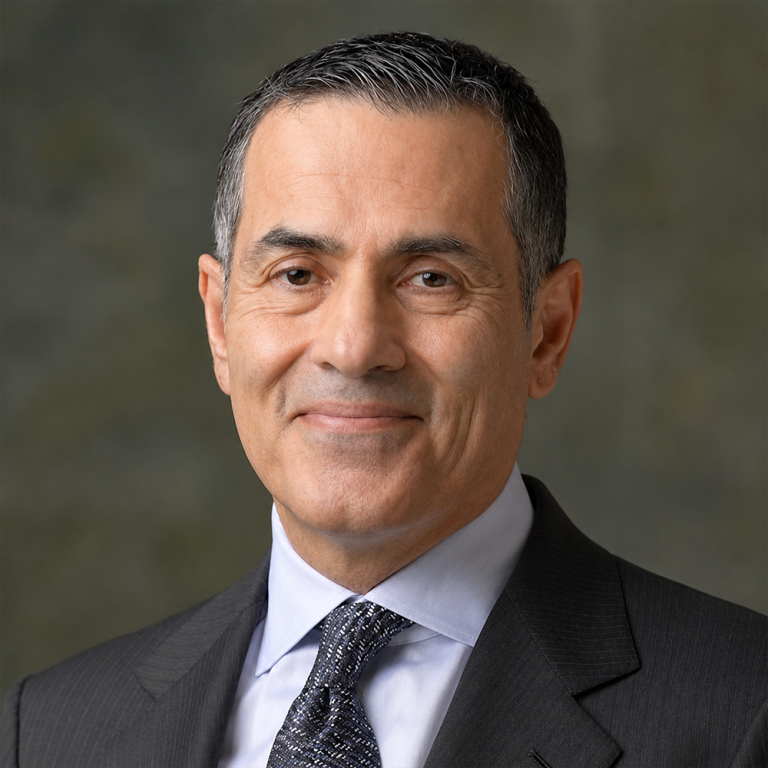
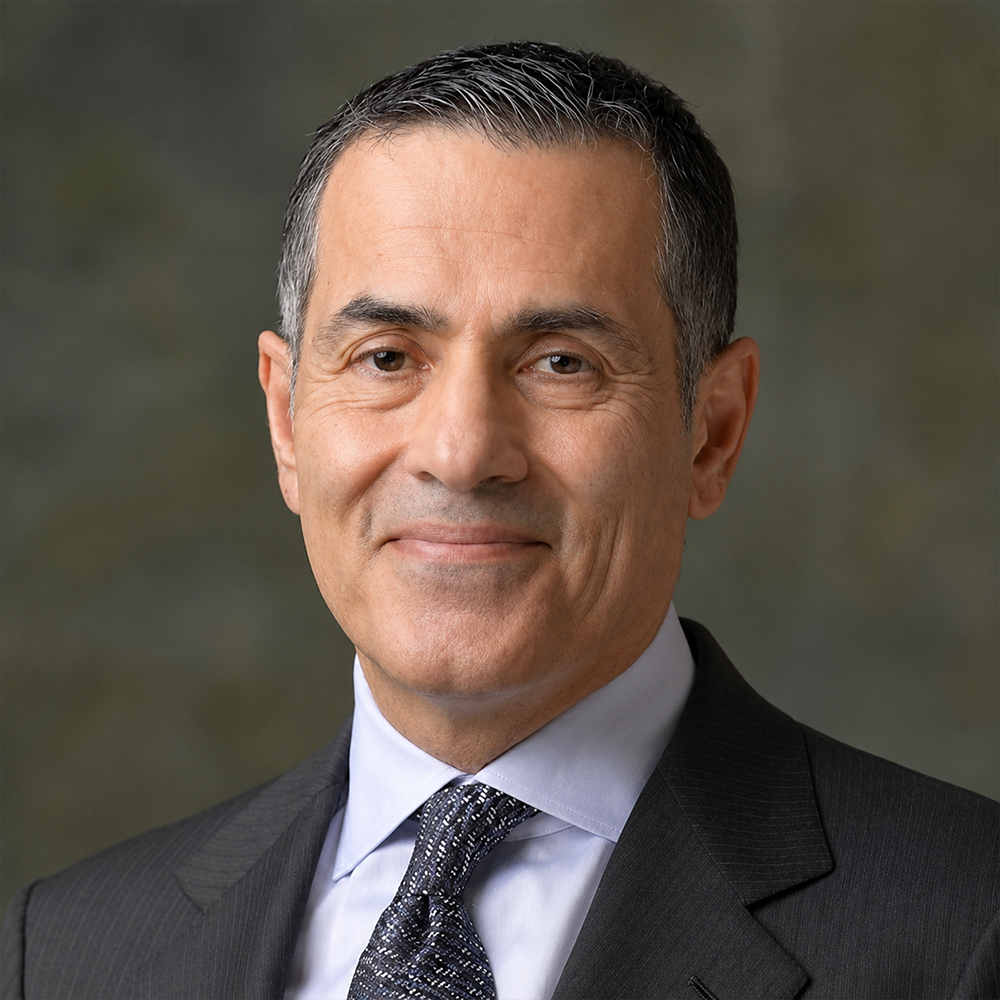
Vali Nasr is a renowned scholar and recognized thought leader on Middle East politics and international affairs. As Majid Khadduri Professor of International Affairs and Middle East Studies at Johns Hopkins SAIS, he couples rigorous scholarship with first-hand policy experience to illuminate the forces reshaping the region and the wider world. During 2012–2019 he steered SAIS as its eighth dean, expanding its global footprint and strengthening its practitioner-focused curriculum. Earlier, he translated academic insight into diplomacy as Senior Advisor to Ambassador Richard Holbrooke, shaping U.S. strategy for Afghanistan and Pakistan (2009–2011). Today, Nasr serves on the Global Board of Trustees of the Asia Society and advises governments, multinationals, and institutional investors navigating geopolitical risk. A prolific author, Nasr’s titles include Iran’s Grand Strategy (2025), How Sanctions Work (2024), The Dispensable Nation (2013), The Shia Revival (2006), and Democracy in Iran (2006). Each challenges conventional wisdom on power, conflict, and economic warfare, offering frameworks adopted by policymakers and boardrooms alike. Nasr is a sought-after commentator for CNN, BBC, Sky News, and Al Jazeera, and his analyses appear in the New York Times, Financial Times, Foreign Affairs, Wall Street Journal, Washington Post, and Time. His contributions have earned the Carnegie Scholar Award, Guggenheim and MacArthur research fellowships, underscoring his credibility and insight. On stage, Nasr equips audiences with clear-eyed assessments and actionable strategies to anticipate change and seize opportunity in an increasingly multipolar era.
Vali Nasr is a renowned scholar and recognized thought leader on Middle East politics and international affairs. As Majid Khadduri Professor of International Affairs and Middle East Studies at Johns Hopkins SAIS, he couples rigorous scholarship with first-hand policy experience to illuminate the forces reshaping the region and the wider world. During 2012–2019 he steered SAIS as its eighth dean, expanding its global footprint and strengthening its practitioner-focused curriculum. Earlier, he translated academic insight into diplomacy as Senior Advisor to Ambassador Richard Holbrooke, shaping U.S. strategy for Afghanistan and Pakistan (2009–2011). Today, Nasr serves on the Global Board of Trustees of the Asia Society and advises governments, multinationals, and institutional investors navigating geopolitical risk. A prolific author, Nasr’s titles include Iran’s Grand Strategy (2025), How Sanctions Work (2024), The Dispensable Nation (2013), The Shia Revival (2006), and Democracy in Iran (2006). Each challenges conventional wisdom on power, conflict, and economic warfare, offering frameworks adopted by policymakers and boardrooms alike. Nasr is a sought-after commentator for CNN, BBC, Sky News, and Al Jazeera, and his analyses appear in the New York Times, Financial Times, Foreign Affairs, Wall Street Journal, Washington Post, and Time. His contributions have earned the Carnegie Scholar Award, Guggenheim and MacArthur research fellowships, underscoring his credibility and insight. On stage, Nasr equips audiences with clear-eyed assessments and actionable strategies to anticipate change and seize opportunity in an increasingly multipolar era.
In Episode 487 of Hidden Forces, Demetri Kofinas speaks with Vali Nasr — professor of international affairs and Middle East studies at Johns Hopkins University, non-resident senior advisor in the Middle East program at the Center for Strategic and International Studies, and author of Iran’s Grand Strategy: A Political History — about the argument that the Islamic Republic’s conduct is driven far less by religious ideology than by national insecurity and historical grievance, how that reframing bears on US and Western policy and the nuclear negotiations, the forces that forged the Islamic Republic into what it is today, and the range of likely outcomes for Iran, the region, and the global economy.
The first hour examines the central argument of Vali’s work—drawn from his book and a recent Foreign Affairs article co-authored with Narges Bajoghli—that the Islamic Republic’s conduct is driven far less by religious ideology than by a deeply entrenched sense of national insecurity and historical grievance rooted in Iran’s long experience of foreign domination. They trace that experience through Iran’s centuries of isolation and weakness, the imperial penetration of the nineteenth century, and the 1953 coup against Mohammad Mossadegh, before turning to why the distinction between ideology and rational national interest is so consequential for how the United States, Tel Aviv, and the West approach Iran—nowhere more so than in the nuclear negotiations.
The second hour turns to the forces that made the Islamic Republic what it is today, beginning with the eight-year Iran-Iraq War—the crucible in which its current leadership, its institutions, and the Revolutionary Guards were formed, and from which Iran drew its doctrine of forward defense and proxy warfare. From there they examine Iran’s nuclear program as an instrument of negotiation and deterrence rather than an end in itself, the effects of the maximum pressure campaign and sanctions, and how the latest war has accelerated cultural change inside the country. The conversation closes by drawing a parallel between the collapse of the Safavid state in 1722 and China’s century of humiliation before considering the range of likely outcomes—including whether a grand bargain is possible and what the default scenario looks like for Iran, the region, and the global economy if the status quo persists.
Subscribe to our premium content—including our premium feed, episode transcripts, and Intelligence Reports—by visiting HiddenForces.io/subscribe.
If you’d like to join the conversation and become a member of the Hidden Forces Genius community—with benefits like Q&A calls with guests, exclusive research and analysis, in-person events, and dinners—you can also sign up on our subscriber page at HiddenForces.io/subscribe.
If you enjoyed today’s episode of Hidden Forces, please support the show by:
Vali Nasr is a renowned scholar and recognized thought leader on Middle East politics and international affairs. As Majid Khadduri Professor of International Affairs and Middle East Studies at Johns Hopkins SAIS, he couples rigorous scholarship with first-hand policy experience to illuminate the forces reshaping the region and the wider world.
During 2012–2019 he steered SAIS as its eighth dean, expanding its global footprint and strengthening its practitioner-focused curriculum. Earlier, he translated academic insight into diplomacy as Senior Advisor to Ambassador Richard Holbrooke, shaping U.S. strategy for Afghanistan and Pakistan (2009–2011). Today, Nasr serves on the Global Board of Trustees of the Asia Society and advises governments, multinationals, and institutional investors navigating geopolitical risk.
A prolific author, Nasr’s titles include Iran’s Grand Strategy (2025), How Sanctions Work (2024), The Dispensable Nation (2013), The Shia Revival (2006), and Democracy in Iran (2006). Each challenges conventional wisdom on power, conflict, and economic warfare, offering frameworks adopted by policymakers and boardrooms alike.
Nasr is a sought-after commentator for CNN, BBC, Sky News, and Al Jazeera, and his analyses appear in the New York Times, Financial Times, Foreign Affairs, Wall Street Journal, Washington Post, and Time. His contributions have earned the Carnegie Scholar Award, Guggenheim and MacArthur research fellowships, underscoring his credibility and insight. On stage, Nasr equips audiences with clear-eyed assessments and actionable strategies to anticipate change and seize opportunity in an increasingly multipolar era.
Demetri Kofinas is a media entrepreneur and financial analyst whose mission is to help uncover the hidden forces and pivotal patterns shaping our lives. His contrarian perspective and critical-thinking approach has helped hundreds of thousands of people make smarter, informed decisions. This same methodology has helped guide Demetri’s decision-making as an early-stage investor and as a creator of several innovative media properties and live events.
Demetri Kofinas is a media entrepreneur and financial analyst whose mission is to help uncover the hidden forces and pivotal patterns shaping our lives. His contrarian perspective and critical-thinking approach has helped hundreds of thousands of people make smarter, informed decisions. This same methodology has helped guide Demetri’s decision-making as an early-stage investor and as a creator of several innovative media properties and live events.
Demetri Kofinas is a media entrepreneur and financial analyst whose mission is to help uncover the hidden forces and pivotal patterns shaping our lives. His contrarian perspective and critical-thinking approach has helped hundreds of thousands of people make smarter, informed decisions. This same methodology has helped guide Demetri’s decision-making as an early-stage investor and as a creator of several innovative media properties and live events.
Demetri Kofinas is a media entrepreneur and financial analyst whose mission is to help uncover the hidden forces and pivotal patterns shaping our lives. His contrarian perspective and critical-thinking approach has helped hundreds of thousands of people make smarter, informed decisions. This same methodology has helped guide Demetri’s decision-making as an early-stage investor and as a creator of several innovative media properties and live events.
Demetri Kofinas is a media entrepreneur and financial analyst whose mission is to help uncover the hidden forces and pivotal patterns shaping our lives. His contrarian perspective and critical-thinking approach has helped hundreds of thousands of people make smarter, informed decisions. This same methodology has helped guide Demetri’s decision-making as an early-stage investor and as a creator of several innovative media properties and live events.